Immersive technologies for marine education
I am an Associate Professor at the Department of Education, Communication and Learning, University of Gothenburg, Sweden and an Affiliate at the Virtual Human Interaction Lab at Stanford University
My research focuses on the role that immersive technologies can play in promoting ocean and environmental literacies. I have one Masters in Marine Biology, another in Education and Information Technology, and a PhD in Education.
Latest publication
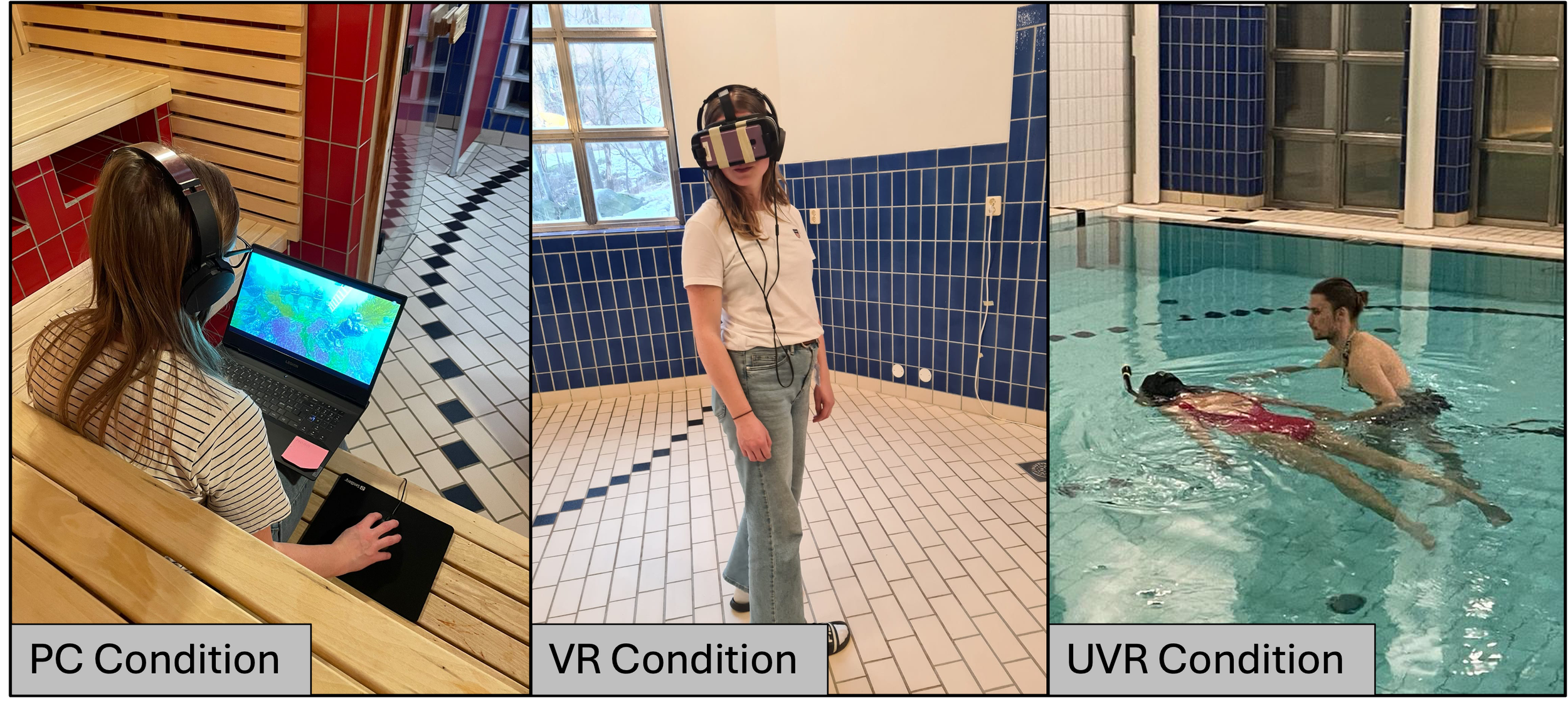
In this study, 214 participants were randomly assigned to experience underwater videos through one of three formats: a computer screen (PC), a standard VR headset (VR), or UVR. They watched two short 360° underwater films featuring marine wildlife, and their reactions were measured before, after, and one month later.
What we found:
UVR created the strongest sense of presence compared to PC and VR.
It also led to higher levels of awe, stronger ocean connectedness, and even higher donations to a marine charity.
However, UVR did not increase short‑term behavioral intentions or long‑term pro-environmental behaviors.
Gender differences appeared across several measures, and feeling presence predicted both awe and ocean connectedness.
Overall, the study highlights UVR’s unique ability to foster meaningful psychological and behavioral responses—more effectively than less immersive media. These findings point to UVR’s promising potential as a tool to support ocean conservation efforts.